Language and Literacy Narrative
I made many changes to my LLN after my one-on-one meeting with my professor. In order to meet the word count and reflect more in my conclusion, I had to remove many lines that I felt added imagery but were sort of filler sentences. I had a pretty difficult time cutting down my narrative while still keeping the same flow and emotion, but some peer advice helped with that issue. Therefore, my final LLN draft is shorter however, it incorporates more personal reflection than the first draft.
Translation 1 Presentation – Archana Venkata
First LLN draft:
Exploitation in Trinidad and Tobago
The bass from the soca music rattled the windows of the maxi as we sped down Trinidad’s dark, narrow roads at 2 a.m.—all fifteen of us packed into the extra-large taxi with color-changing LED lights flashing like a party on wheels. The maxi was humid and the air was thick with the spicy scent of doubles (pillowy fried dough stuffed with curried chickpeas) and the sweetness of sorrel (a crimson hibiscus tea). We were unapologetically loud and sweaty but that didn’t hinder our buzzing excitement. After years of Skype and pixelated memories we virtually shared, I was finally seeing my mother’s side of the family for the first time since 2009. The bumpy hour-and-a-half ride from the airport in Port of Spain to my aunt’s house in Chaguanas was exhilarating, every mile bringing us closer to part of my family that I had only ever seen in pictures and video calls.
After about an hour and a half, we finally arrived at my aunt’s house around 3 a.m. We woke up the entire neighborhood with the amount of noise we made upon our arrival. I remember watching my aunt run out of the maxi while screaming to hug her sister who was already bawling. Seeing my aunts and cousins for the first time was a core memory because I had only spoken to them through FaceTime and Skype. We felt as if we were finally reunited, even if it was only for two weeks. Although I hadn’t seen my cousins since I was 2 years old, we clicked so fast and it felt as if we had never been apart.
The emotional reunion had barely ended and my uncles were still in the car debating who should cover the cost of the maxi ride while the rest of us hauled the avalanche of suitcases from the trunk. In Trinidad and Tobago, the currency is seven times the amount of USD, so naturally we all knew that the cost of anything there would have seemingly higher prices. With this in mind, one of my uncles paid $400 TTD just to get to my aunt’s house from the airport. Since we all enjoyed this particular maxi because of the spaciousness and good ambience, he didn’t mind the price and we continued using this specific car as a mode of transportation throughout most of our stay in Trinidad.
A week later, we decided to go to visit Maracas beach together and we called the same maxi driver to take us there. Everyone was rushing out of the house since the driver had already arrived—I was still applying sunscreen on my niece and nephew right before we stepped out. We were excited to go back in the same maxi until we realized that they sent another maxi to pick us up. Apparently, the other maxi driver called my aunt’s phone at the last minute to say, “Maracas beach too far for meh to drive, I send a next maxi for all yous”. We all loaded up into this new maxi that didn’t have air conditioning, roll-down windows, or a bluetooth system so we just spoke amongst ourselves in the scorching heat for the thirty minute ride. After what felt like an eternity, we finally got to Maracas beach. As soon as I stepped out of the maxi I felt the sea breeze hit my skin and the sand was already creeping into my crocs. I could’ve smelled the delightful scent of bake and shark (crispy shark sandwich served in puffy fried bread, drizzled with chutneys) from a mile away.
While the debate over who got to pay for the ride was ongoing, I overheard my uncles arguing with the maxi driver. This was abnormal so I went to see what was happening while my cousins and niblings sprinted towards the turquoise sea. I overheard that after one of my uncles reluctantly paid $700 TTD for the thirty-minute trip, the driver made a snide remark: “Me nah believe it til’ my buddy tell me to pick all yous up. You Americans real generous.” He laughed as he raced to his maxi and sped away. I saw both of my uncles stunned as they watched the maxi zoom off because a realization hit with the driver’s words. Throughout the entirety of our trip, all the maxi drivers were overcharging us because they knew that we were not locals.
The previous maxi that we actually enjoyed riding in, tipped off this new maxi driver—probably his friend—and let him take us to the beach to further exploit us. They heard our American accents—even though many of us tried our best to hide it—and jacked up the prices. This reflects the cultural/racial stereotypes and exploitation not just against Americans in Trinidad, but to tourists in general. Once the maxi drivers heard our American accents they automatically made assumptions about our wealth and lack of local knowledge. For the rest of our stay in Trinidad, many of us had to either whisper amongst ourselves or just not speak at all while we were in public to avoid the “tourist prices”.
My family and I still discuss this incident because my aunts and uncles never expected that their own people would rip them off over something as simple as transportation. We decided that the next time we travel to Trinidad, we’re going to rent a big van instead of calling for maxis. I never realized how important language is until I experienced this. If we had been more attentive and spoke with a Trinidadian accent the whole time, we most likely wouldn’t have been scammed. We were so focused on experiencing a new environment with our reunited family that we forgot the basic principle of travel—speak with a strong accent or don’t speak at all in public.
Final LLN draft:
Exploitation in Trinidad and Tobago
I was sixteen years old, and after years of Skype and pixelated memories we shared virtually, I was finally seeing my mother’s side of the family for the first time since 2009, when I was three years old and they visited us in America. The bumpy hour-and-a-half ride from the airport in Port of Spain to my aunt’s house in Chaguanas was exhilarating.
The bass from the soca music rattled the taxi’s windows as we sped down Trinidad’s dark, narrow roads at 2 a.m., all fifteen of us packed into the extra-large taxi with color-changing LED lights flashing like a party on wheels. The air was humid and thick with the spicy scent of doubles (pillowy fried dough stuffed with curried chickpeas) and the sweetness of sorrel (a crimson hibiscus tea).

We finally arrived at my aunt’s house around 3 a.m., waking up the entire neighborhood with our noise. My aunt sprinted out of the taxi, screaming to hug her sister who was already bawling. Seeing my aunts and cousins in person for the first time, I felt as if our family was finally reunited, even if it was only for two weeks.
The emotional reunion had barely ended and my uncles were still in the car debating who should pay for the taxi while the rest of us hauled an avalanche of suitcases from the trunk. In Trinidad, the currency is seven times the amount of USD, so naturally we all knew that the cost of anything there would have seemingly higher prices. Finally, one of my uncles paid $400 TTD (about $60 USD) for the airport ride.
A week later we visited Maracas Bay, one of the most popular beaches on the island, and we called the same taxi driver to take us there. We were excited to take the same car since we had such a great time before, but suddenly the taxi company sent a different car to pick us up. Apparently, the first driver called my aunt at the last minute saying in his heavy local accent, “Maracas too far for meh to drive, I go send a next taxi for allyuh.”
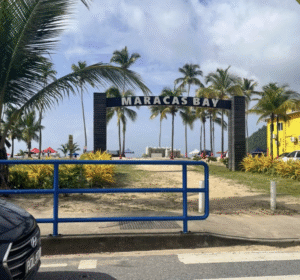
We all loaded up into the replacement taxi that didn’t have air conditioning, roll-down windows, or Bluetooth. We sat in the scorching heat, speaking amongst ourselves for the thirty-minute ride. After what felt like an eternity, we finally got to Maracas Bay. The sea breeze against my skin felt heavenly and I felt sand creeping into my Crocs.
While my uncles debated over who should pay, I heard the driver haggling with them. Eventually, one uncle reluctantly paid $700 TTD (about $104 USD) for the thirty-minute trip. Then the driver made a snide remark: “Me nah believe it til’ meh fren tell meh to pick allyuh up. Americans rel generous man!” He laughed as he raced to his taxi and sped away. My uncles were stunned as they watched him zoom off. It became clear that the first driver had tipped his friend off about us, and we were being overcharged simply because of our American accents. They heard our accents, even though many of us tried our best to hide it, and immediately assumed that we were wealthy foreigners.

For the rest of our stay in Trinidad, many of us had to either whisper amongst ourselves or just not speak at all while we were in public to avoid the “tourist prices.” My family decided that the next time we travel to Trinidad, we’re going to rent a van instead of calling for taxis. This experience opened my eyes to how local Trinis perceive accents and treat tourists accordingly.
I felt especially cheated since I am half-Trini and I have both an American and a Trinidadian accent. Whenever I forgot to code-switch between dialects in public, it only led to further discrimination. If we had been more attentive and spoke with a Trinidadian accent the whole time, maybe we wouldn’t have been scammed. But in our excitement to experience a new environment with our reunited family, we forgot one principle, blend in or remain silent. This trip taught me more than just cultural awareness, it showed me how identity can shift with something as simple as accents. I realized that being “half” of any nationality can sometimes be seen as neither, and that fitting in is not just about where you’re from, but how you speak when you get there.

